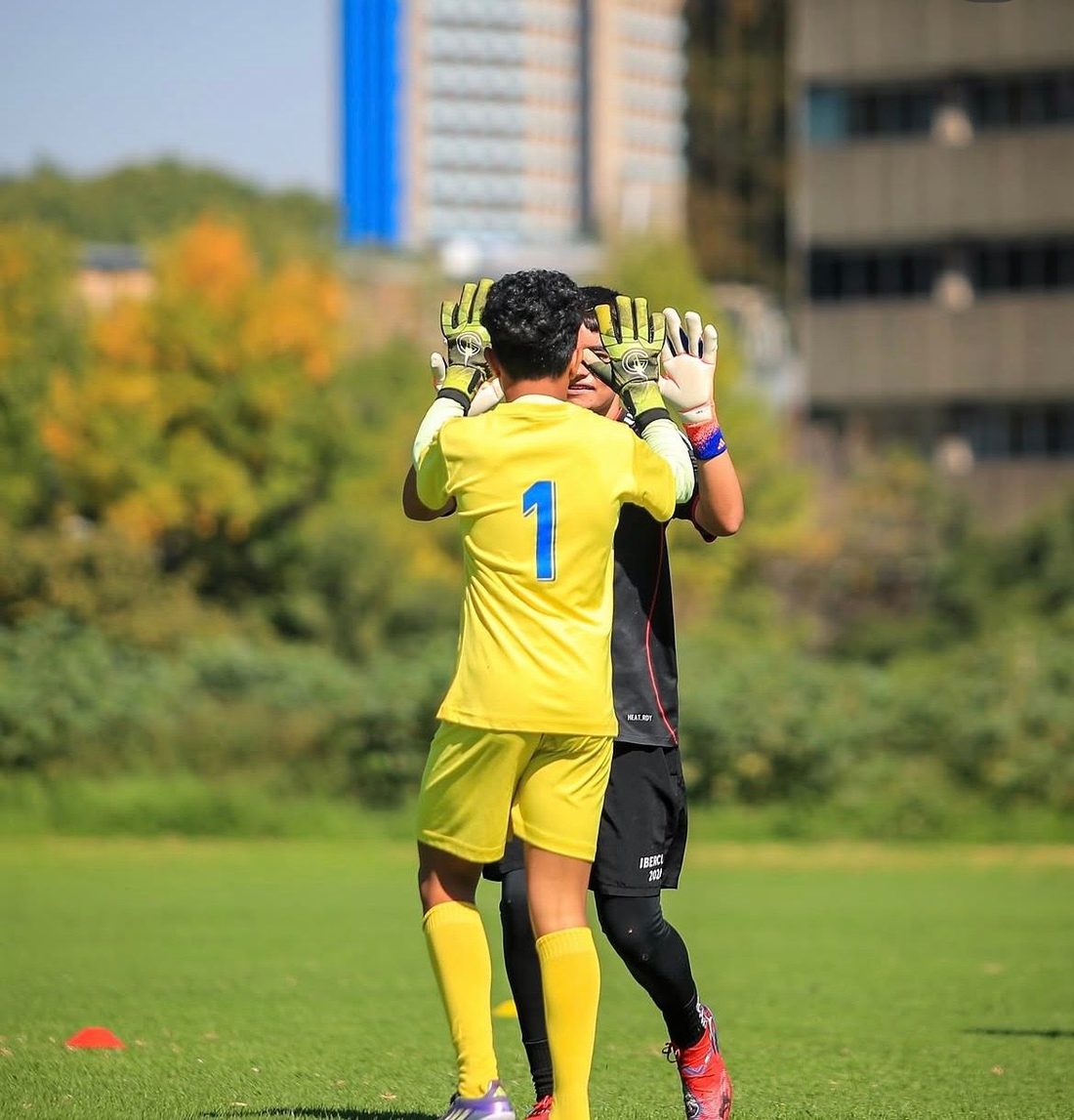
Stage 1 — Ages 7-9: Foundation — "Me & The Ball"
Create a positive relationship between the child, their body, the ball and the goal. We want a goalkeeper who enjoys the position, is comfortable with the ball, can perform basic movements safely and is willing to make mistakes and try again.
Outcomes: - Positive relationship with the ball and the goal - Basic movement and handling skills - Willingness to try and make mistakes - Enjoyment of the position
Stage 2 — Ages 10-12: Development — "Me & The Game"
The goalkeeper moves beyond "Can I perform this technique?" toward "When should I use it?" Technique + Decision = Goalkeeping.
Outcomes: - Basic angles — understanding positioning relative to the ball - Starting positions — where to be before the action unfolds - Distribution — choosing the right option with the ball - Communication — beginning to organise and lead
Stage 3 — Ages 13-15: Performance — "Me & The Team"
"I am not simply protecting the goal. I am influencing the team."
Outcomes: - Positioning — reading the game before the ball moves - Defensive relationships — organising the team's defensive shape - Game reading — anticipating threats early - Emotional control — staying composed when the game demands it
Stage 4 — Ages 16-18: Pre-Professional — "Me & The Professional Game"
The question changes from "Can you become a goalkeeper?" to "Can you perform consistently at a serious level?"
Outcomes: - Technical mastery - Tactical performance - Professionalism - Performance analysis - Career preparation
The Progression Model
| Stage | Question |
|---|---|
| Stage 1 | Can I do it? |
| Stage 2 | When should I do it? |
| Stage 3 | Why am I doing it? |
| Stage 4 | Can I consistently make the right decision under pressure? |